A concrete and turf driveway merges the hard-wearing strength of concrete with the soft, vibrant look of artificial grass or turfstone. This design not only enhances curb appeal but also aids drainage, reduces heat absorption, and saves water. Here, you’ll explore how these hybrid driveways are built, why they’re useful, and how modern innovations support sustainable living.
What Is a Concrete and Turf Driveway?
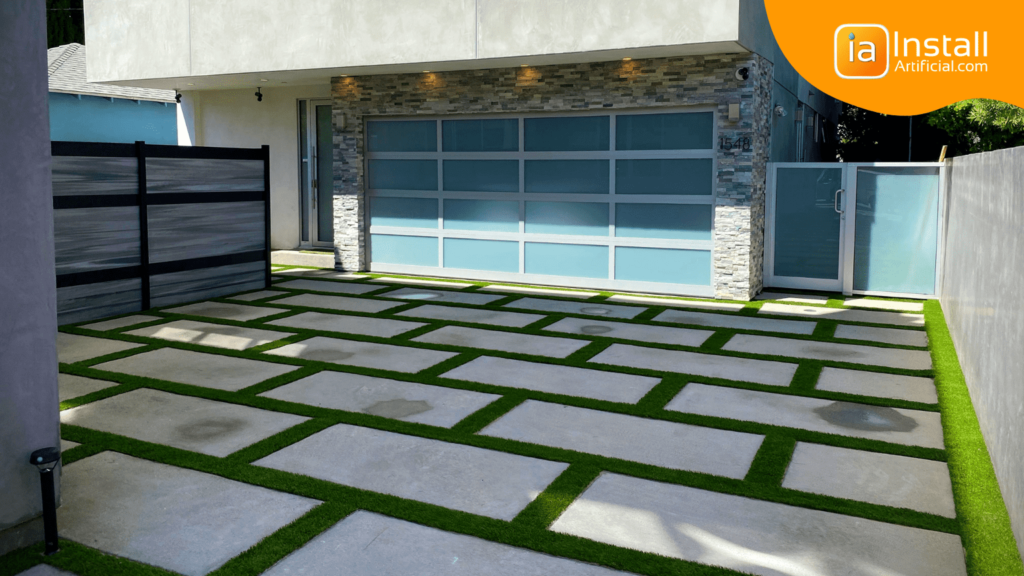
A concrete and turf driveway combines concrete surfaces, either poured slabs, pavers, or grid blocks, with turf areas (synthetic or reinforced natural grass). These turf sections may fill gaps between pavers or sit within permeable grid systems like turfstone. Installation integrates both materials through thoughtful base preparation, precise layout control, turf anchoring, and drainage solutions.
This concept blends hardscape utility with green aesthetic, creating visually appealing, permeable, and eco‑logical driveways that are resilient under vehicle pressure.
Why Choose This Hybrid Design
Blending concrete and turf delivers multiple benefits beyond aesthetics. Turf areas significantly improve permeability, enabling stormwater to recharge the ground an increasingly important factor in sustainable landscaping. It reduces heat reflection from concrete and keeps the driveway cool, rimportant in warmer climates.
For urban settings, this design brings greenery to minimal lawn space, transforming purely concrete expanses into more welcoming landscapes. The grass accents give a softer, modern charm that enhances property value.
Technologies & Installation Techniques
Modern systems use:
-
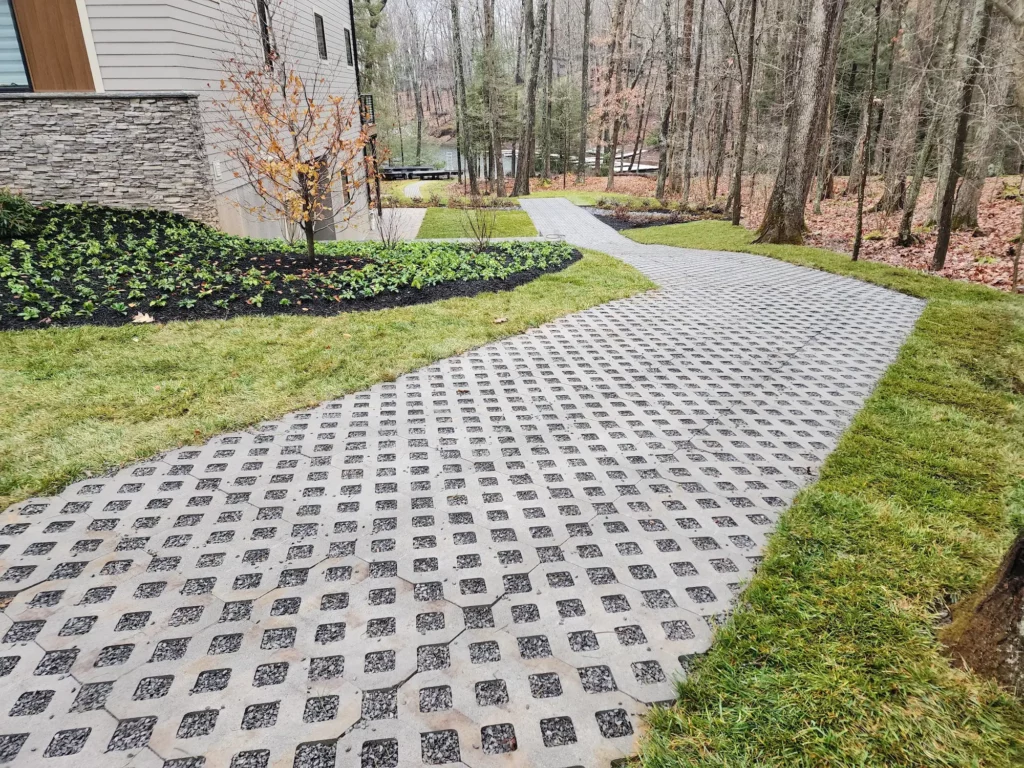
Turfstone grid pavers: concrete grids filled with grass, offering strength and permeability.
-
Artificial turf blocks: prefilled concrete pods topped with synthetic grass, ideal for precise patterns.
-
Paver strips with turf ribbons: concrete pavers spaced for grass infill, creating tailored designs.
Installation involves base layers (gravel, sand), professional grading and drainage planning, followed by precise setting of concrete elements and turf incorporation. Drainage and durability are ensured through compaction, permeable media, and weed suppression layers.
Benefits of Modern Hybrid Driveways
Enhanced Stormwater Management
Permeable turf grids and turfstone pavers absorb rainwater, reducing runoff and pressure on storm systems. This mimics natural absorption, protecting ecosystems and minimizing flooding risks.
Cool, Eco-Friendly Surface
Grass sections reduce heat retention common in concrete driveways. The reduced surface temperature makes the driveway safer underfoot and lowers the surrounding ambient heat.
Aesthetic Appeal and Property Value
The contrast between lush green turf and clean concrete creates a polished, architectural look. It draws attention from passersby and raises the visual and resale appeal of the hoe.
Durable and Low Maintenance
High-quality artificial turf withstands foot and light vehicular use for 15–20 years. Grid systems support vehicle loads while protecting greenery beneath. Maintenance is minimal: occasional brushing, weed control, and cleaning suffice.
Real-World Examples of Concrete & Turf Driveways
Residential Grid-Style Driveway with Turfstone
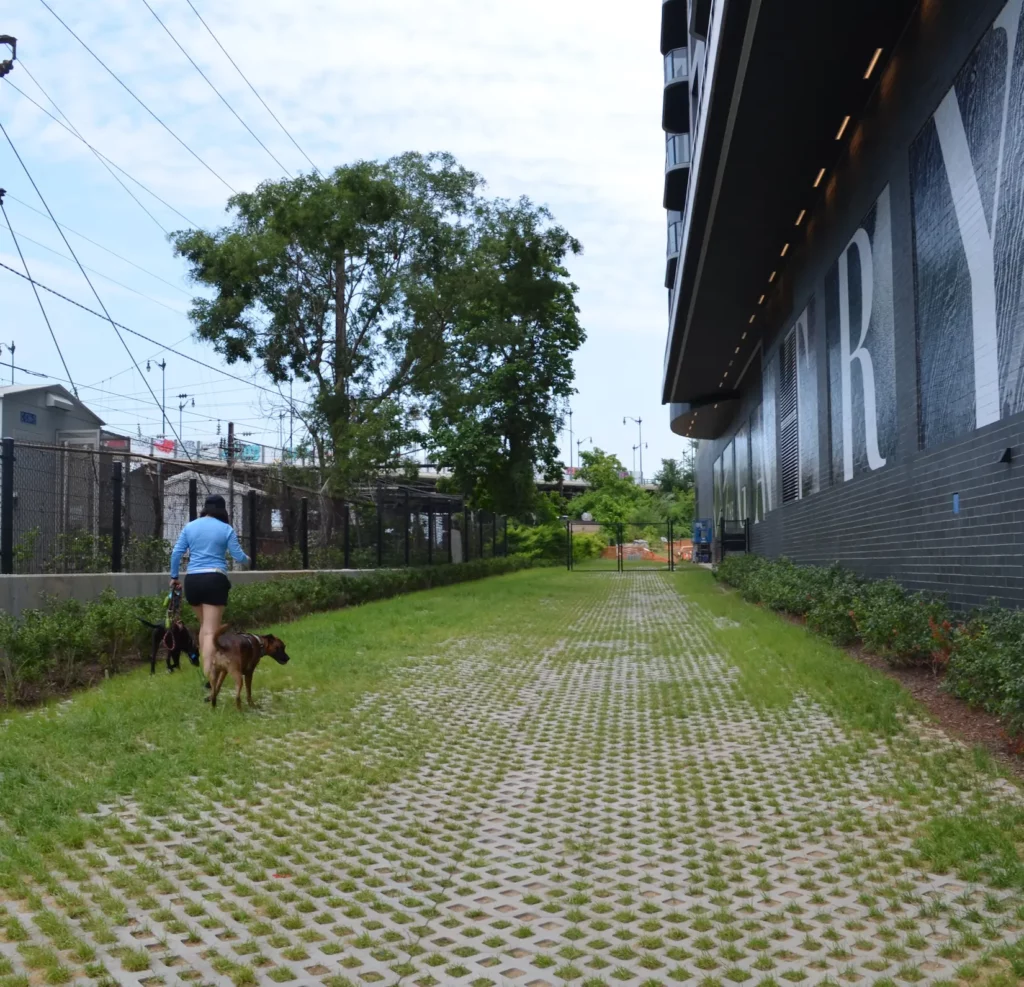
A suburban homeowner opted for Turfstone, a grid paver filled with natural grass. The installation supported car parking, allowed water infiltration, and kept the surface green and visually integrated with the lawn.
Relevance: Shows how grid pavers reinforce natural turf while delivering permeability and durability—ideal for low-impact suburban environments.
Artificial Turf Blocks in Urban Driveway
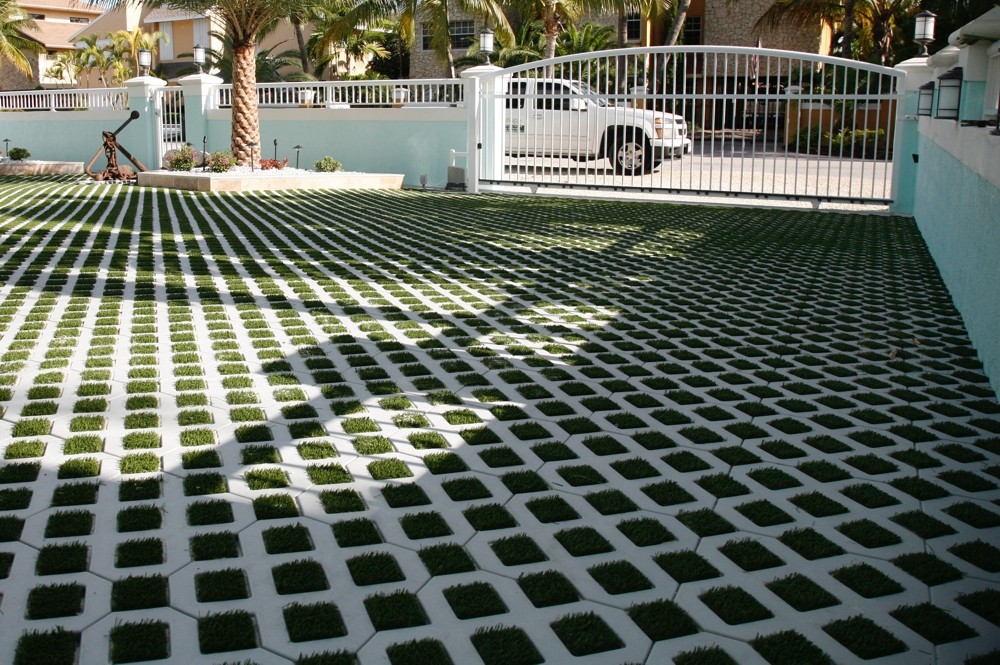
In a compact city lot, synthetic turf blocks fit between concrete pods. The lightweight artificial grass maintained its form, resisting vehicle weight, without requiring irrigation.
Relevance: Demonstrates how artificial turf blocks support design flexibility and sustain regular parking without damage.
Striped Concrete Pavers with Grass Ribbons
Long rectangular concrete pavers with turf joints.
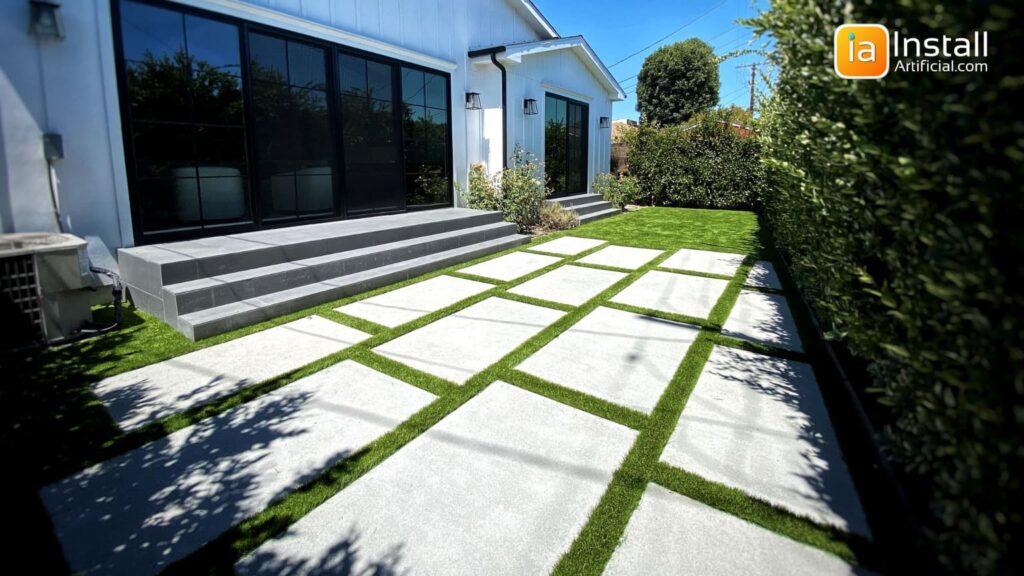
A modern townhouse driveway uses linear pavement strips with narrow turf ribbons. The clean lines elevated the façade design and enhanced surface permeability.
Relevance: Ideal for modern aesthetics, this layout combines functionality and visual rhythm while integrating greenery.
Designer Estate with Mixed Material Driveway
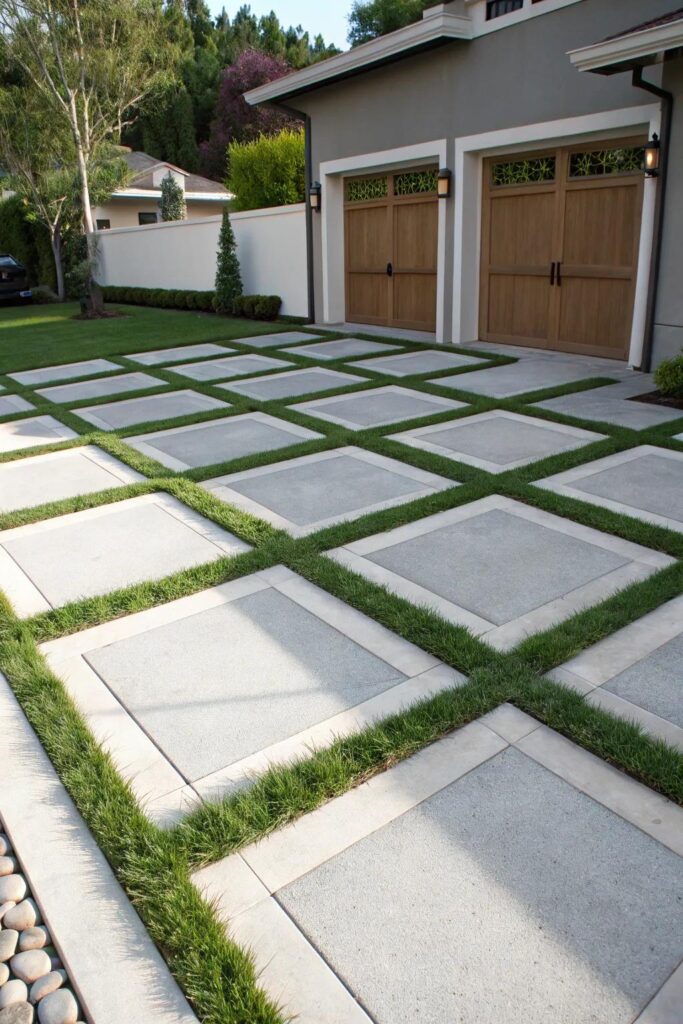
A luxury estate incorporated concrete squares, basalt stone accents, and grass patches in a geometric layout. The driveway directed car flow while doubling as a landscaped feature, a garden.
Relevance: Shows high-end design that balances usability and artistry, exemplifying how turf-concrete designs integrate into architectural themes.
Permeable Turf Driveway for Sustainable Living
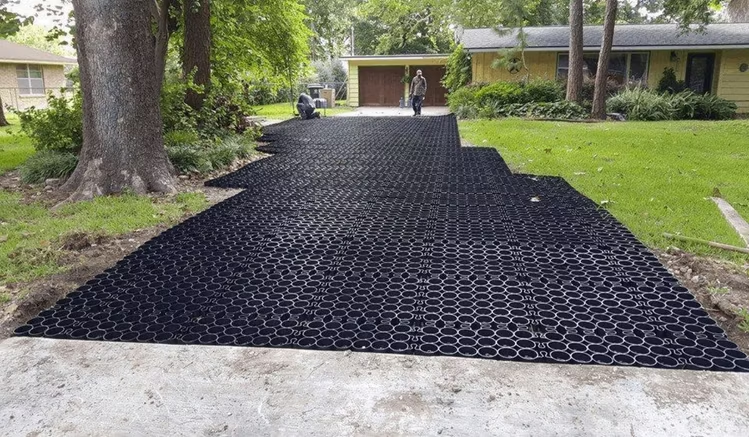
A homeowner committed to eco-skills had a driveway built with permeable turf grids. Rainwater percolated directly into the soil, reducing runoff and replenishing groundwater.
Relevance: Ideal for environmentally focused households, this installation aligns with sustainable, stormwater-compliant infrastructure.
Practical Use Cases and Problem Solving
Eliminating Heat Islands and Cooling Driveways
Concrete can raise ground-level temperatures. Integrating turf reduces heat absorption and maintains a cooler surface, especially important in hot climates or urban environments.
Solving Runoff and Erosion Issues
Conventional driveways direct water outward, risking erosion or basement seepage. Turf-concrete hybrids absorb and filter stormwater, protecting landscapes and infrastructures.
Adding Visual Continuity in Urban Lots
In small front yards, turf infill breaks up harsh concrete lines and expands green space without increasing irrigation, improving visual harmony and wellbeing.
Providing Multifunctional Spaces
Hybrid driveways are safe for temporary pedestrian use, kids’ play, or garden overflow. The turf is gentle underfoot and visually blends driveway and yard.
FAQs
Q1: Can I park on turf-concrete driveways?
A: Yes. Systems like Turfstone and concrete pods are engineered to support typical vehicle weights. Reinforced turf drives perform well with structural base preparation, IV on.
Q2: Does artificial turf flatten under vehicle load?
A: Over time, blades may compress, especially under heavy loads. Using high-density product and rotating vehicles can mitigate this. Keeping turf strong depends on quality basework and infills .
Q3: Is maintenance difficult for these driveways?
A: Maintenance is low but necessary. Artificial turf needs occasional brushing, debris cleaning, and infill refresh. Natural turf pavers need mowing, weed control, and reseeding as needed.